 |
   |

256-bit SSL Digital Web CertificatesSecuring Your Outlook Web Access 2000 Implementation Using SSLSecuring Your Outlook Web Access 2000 Implementation Using SSL Certificate Installation
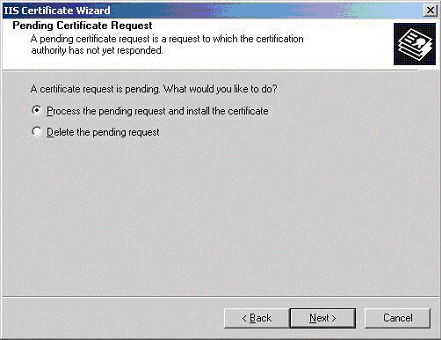
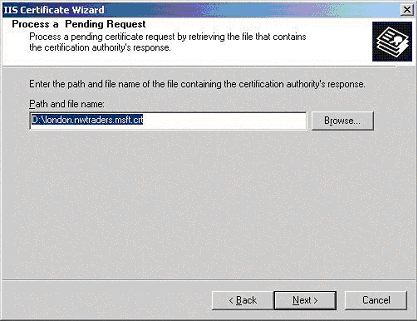
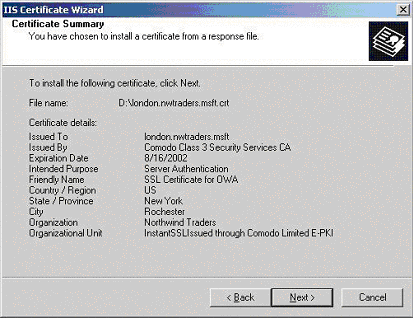
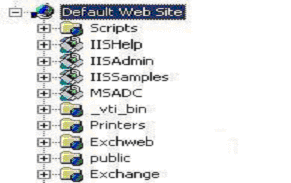
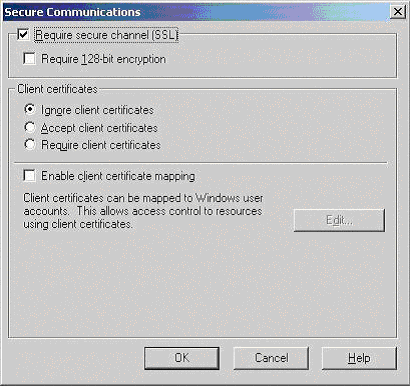
You have now installed the SSL certificate into our web site, the next step is to enable SSL for OWA - this is a pretty simple task.
When users enter http://ahost.adomain.com/exchange, they will receive an "HTTP 403.4 - Forbidden: SSL required Internet Information Services" error message, because OWA is configured to require SSL. SSL uses the HTTPS protocol, so users would need to enter the url as https://ahost.adomain.com/exchange. Please see the Microsoft article regarding forcing the use of SSL with OWA: http://support.microsoft.com/search/preview.aspx?scid=kb;en-us;Q279681 One final step that you may need to take is to ensure that your Firewall is configured to allow HTTPS (port 443 by default) to pass through. |
| For more details please fill in the enquiries form in our contact us section or call us on +44 (0) 870 2242499 or e-mail us at enquiries@centurywebdesign.co.uk Digital
Certificates | Buy
a Certificate now | FAQ'S
| Browser
Compatibility | Compare
Us Century Web Design, 9 Wheatley Rd, Cardiff, South Wales, CF5 4LT |